
- Source of omega-3 fatty acids for the maintenance of good health
- Helps maintain/support cardiovascular health
- Helps support cognitive health and/or brain function
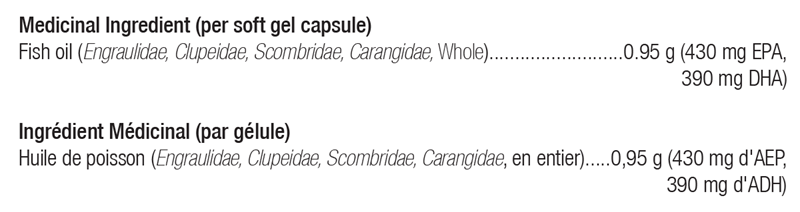
Clinical Applications
- Source of omega-3 fatty acids for the maintenance of good health
- Helps maintain/support cardiovascular health
- Helps support cognitive health and/or brain function
Omega-3 fatty acids are essential cornerstones of human nutrition. They are deemed “essential” because we need them for proper health but cannot produce them on our own. We must consume these fats through diet or supplementation. Omega-3 fatty acids are required for a number of body functions, from normal growth to brain development. These long-chain fatty acids are integral components of tissues throughout the body, including the heart, skin, eyes and brain. In nature, omega-3 fatty acids occur as alpha linolenic acid (ALA), found mostly in plants, and as long-chain EPA and DHA, which originate in algae and bioaccumulate in fish. The body is able to slowly convert the shorter-chain ALA to the more active, long-chain EPA and DHA. The slowness of the conversion is due to delta-5 and delta-6 desaturase enzyme activity, which limits the production of EPA and DHA.
In addition, major changes in modern diet over the last century have led to a decrease in the general consumption of omega-3 fatty acids. Since omega-3 fatty acids are known to benefit cardiovascular health and support brain function and cognition, achieving the proper balance of omega-3s has become and important health strategy, requiring supplementation for most people. The American Heart Association recommend that those concerned about blood lipids take up to 4 g of omega-3 fatty acids per day.